Stitching Methods for Heavy-Duty Custom Bags — OEM Factory
Construction & Stitching
Stitching methods for heavy-duty custom bags from a China OEM factory — lockstitch, double stitching, nylon thread, SPI, and reinforcement for B2B tactical and military bags.
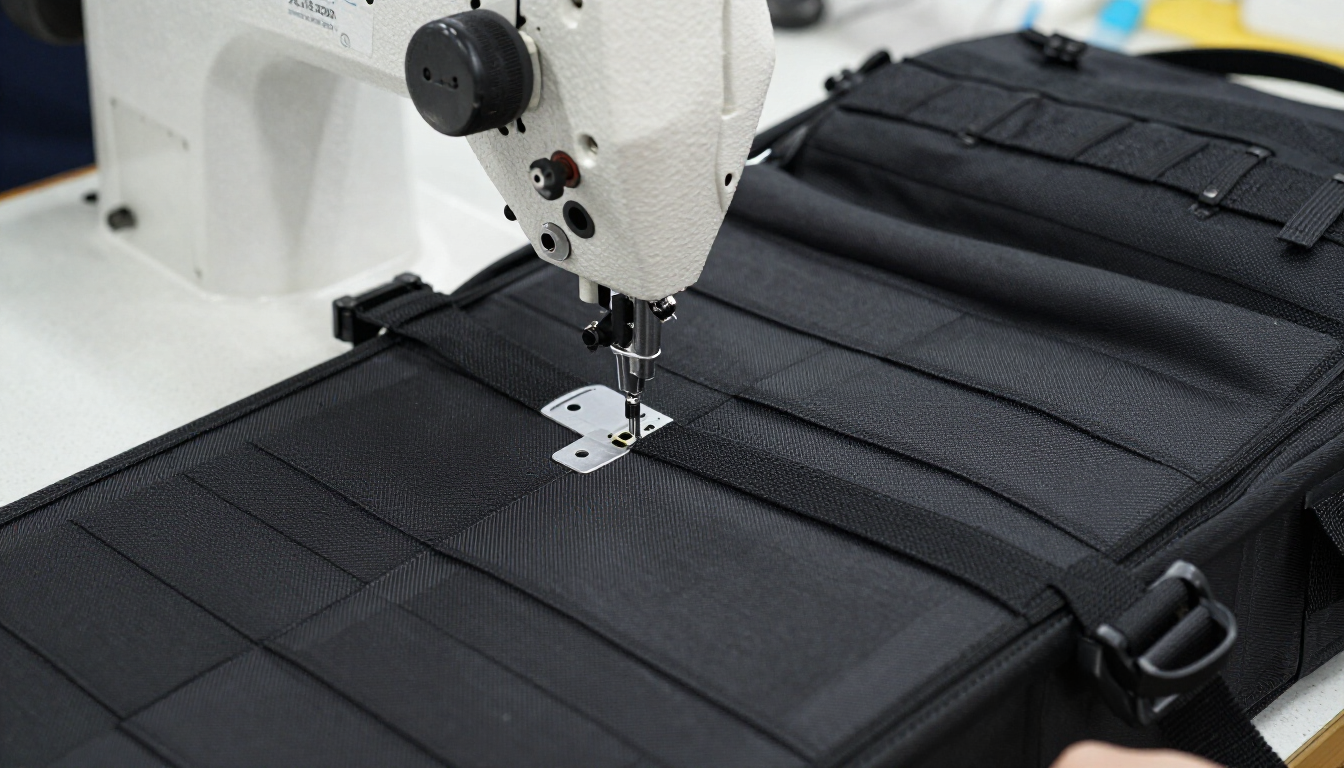
Stitching is what holds a heavy-duty bag together under load, so the method and thread matter as much as the fabric. At Ronta (Xiamen) Co., Ltd, we use specific stitching techniques for heavy-duty and tactical bags.
We use lockstitch (301) as the primary seam for most bag panels, with double or triple stitching on stress areas. For load-bearing seams, we use bonded nylon thread (size 69, 92, or 138), which is stronger and more abrasion-resistant than polyester thread and resists UV degradation.
Stitch density (SPI — stitches per inch) is set to around 8–10 SPI for heavy-duty bags: dense enough for strength, but not so dense that it perforates and weakens the fabric. We also use box-X and bar-tack stitching at stress points such as strap attachments, handle bases, and MOLLE webbing.
For waterproof and seam-sealed bags, we use seam taping or welding instead of, or in addition to, stitching to maintain water resistance. Every heavy-duty bag goes through pull and load testing before approval.
To discuss stitching specifications for your heavy-duty bags, contact sales@xmronta.com — Ronta (Xiamen) Co., Ltd will detail the methods and provide samples.
Email: sales@xmronta.com
Browse the site: Home · Bags Manufacturing · Portfolio · Knowledge Base · FAQ · OEM & ODM Service · Contact · Our Factory