How to Choose Insulated Cooler Bags for Your Program
Products & Capabilities
Compare insulated cooler bag formats, packed contents, carrying needs and sample checks. Prepare a clear brief for materials, thermal evaluation and OEM quotations.
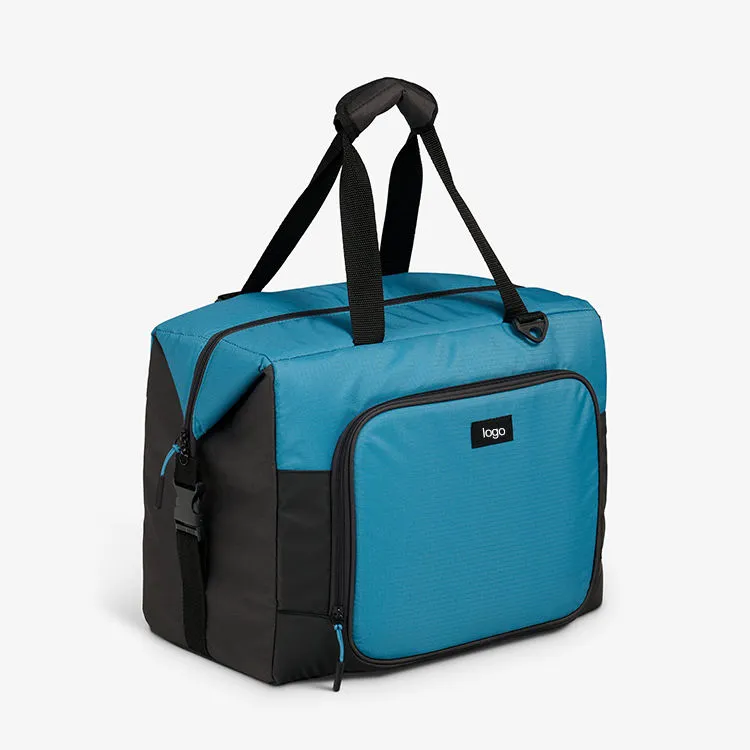
Choose an insulated cooler bag from the actual contents you carry, how you carry it, the time and environment it is used in, and how it is cleaned. A material name or an external dimension cannot replace loading the sample with your real items and reviewing fit, access and construction together. This guide covers the selection decisions a buyer controls before requesting materials, thermal evaluation and OEM quotations; for the manufacturer overview and gallery, see our cooler bags manufacturer page, and for insulation material detail, our insulation materials guide.
Start With the Packed Contents
List the containers, bottles and cans you actually carry — their shape, dimensions and quantity — and the space ice packs take up. Note the opening you need and whether a divider separates food from ice. The bag's internal usable space, not its external size, decides whether the load fits.
- Container and bottle shapes, dimensions and quantity
- Ice-pack size and the space it occupies
- Opening width and any divider between food and ice
- Internal usable space confirmed on a loaded sample
A sample loaded with your real containers confirms fit. Fill in these values for your program rather than assuming a litre rating answers the question.
Compare the Carrying Formats
Four common formats, each with a different loading priority. None is automatically leak-proof or suitable for every size — review each against what you actually carry.
| Format | When to consider | Check on the sample |
|---|
| Lunch bag | Stacking meal containers for daily use | Container stack height, opening width, ice-pack fit |
| Cooler tote | Loading and reaching in for picnics or retail | Access opening, handle drop, packed volume |
| Cooler backpack | Walking with the load on your back | Load centre, strap padding, back-panel contact |
| Delivery bag | Repeated access on a delivery route | Container layout, divider, cleanability |
Review the Construction as a System
An insulated cooler bag is built from four parts that work together: the outer shell, the insulation layer, the inner lining and the closure. The outer shell takes wear; the insulation layer slows heat transfer; the lining is the surface in contact with contents; the closure — a zipper or roll-top — controls access and forms part of the construction to assess for any leak-resistance target; a standard zipper does not by itself guarantee a seal.
EPE foam, PEVA and a reflective foil layer are materials you can discuss and select, but a single material name does not tell you how the whole bag performs. Thermal retention and leak resistance depend on the full construction reviewed together on the sample. Specific insulation thickness is set by the use case and confirmed on the sample, not assumed from a number, and a lining material alone does not establish food-contact compliance for your target market.
For a deeper comparison of insulation materials, see our insulation materials guide.
Define a Meaningful Thermal Evaluation
Before comparing bags on cold retention, agree the test method, conditions and acceptance criteria with the factory. Fill in these fields for your evaluation:
- Ambient conditions (temperature and humidity)
- Start temperature of contents
- Type and quantity of contents
- Ice-pack configuration
- Opening frequency during the test
- Target duration and temperature criteria
- Measurement positions inside the bag
Compare results only between bags tested under the same agreed conditions. Agree who will carry out the evaluation, what will be measured and which results will be recorded. Assess each result against the agreed conditions and acceptance criteria; the outcome does not constitute food-safety storage advice or a guaranteed hold time.
Sample Review Before Production
Before approving production, load the sample with your real contents and check:
- Fit and internal usable space
- Opening and closure operation
- Carry comfort when loaded
- Lining seams, cleaning and any leak-resistance target
- Logo or print placement
- Packing and sample version record
Any test or AQL sampling must be agreed in advance — record the inspection scope, level, defect classification and acceptance limits in the project requirements before production. See our AQL inspection checklist and sampling process checklist.
Prepare a Comparable Quote Brief
To get a comparable quotation, prepare:
- Use case / application
- Contents and measurements
- Carry format
- Selected materials or preferences
- Quantity by color
- Artwork and branding
- Packing requirements
- Target market
- Delivery target
- Test requirements
List planned quantities by style and color. Ask the quotation to state minimums, any grouping conditions, sample costs and timing, and the bulk production schedule.
For a quotation, email sales@xmronta.com — Ronta (Xiamen) Co., Ltd will confirm materials, sampling and a production window for your program.
Frequently Asked Questions
How do I confirm the right capacity for an insulated cooler bag?
Load the sample with your real containers, bottles and ice packs and check the internal usable space. An external dimension or litre rating does not confirm fit; the loaded sample does.
Does thicker insulation always keep contents cold longer?
Thicker foam can slow heat transfer, but cold retention depends on the full construction — shell, insulation, lining and closure — and the test conditions. Compare bags tested under the same agreed method, not by foam thickness alone.
Does a PEVA lining mean the bag is leak-proof?
No. Leak resistance depends on the lining material, seam construction and closure working together. State the intended use and leak-resistance target, then agree a sample test method and acceptance criteria.
How do I request food-contact documentation?
State the intended use — direct or indirect food contact — and your target market, then review material composition and supplier documentation for the selected lining against those requirements. Request the documents relevant to the selected material and intended contact conditions.
What does a cooler bag quotation need from me?
Use case, contents and measurements, carry format, material preferences, quantity by color, artwork, packing, target market, delivery target and any test requirements. MOQ, sample cost and lead time are confirmed in the quote.
Review Your Cooler Bag Brief
Email: sales@xmronta.com
Browse the site: Home · Bags Manufacturing · Portfolio · Knowledge Base · FAQ · OEM & ODM Service · Contact · Our Factory