How Much Does It Cost to Manufacture Custom Bags in China?
Pricing Guide
A practical B2B guide to what drives the cost of manufacturing custom bags in China — materials, labor, MOQ, sampling, branding, FOB pricing, Incoterms, and landed cost — with cost tables, calculation formulas, an RFQ checklist, and FAQs from the Ronta OEM/ODM manufacturing team.
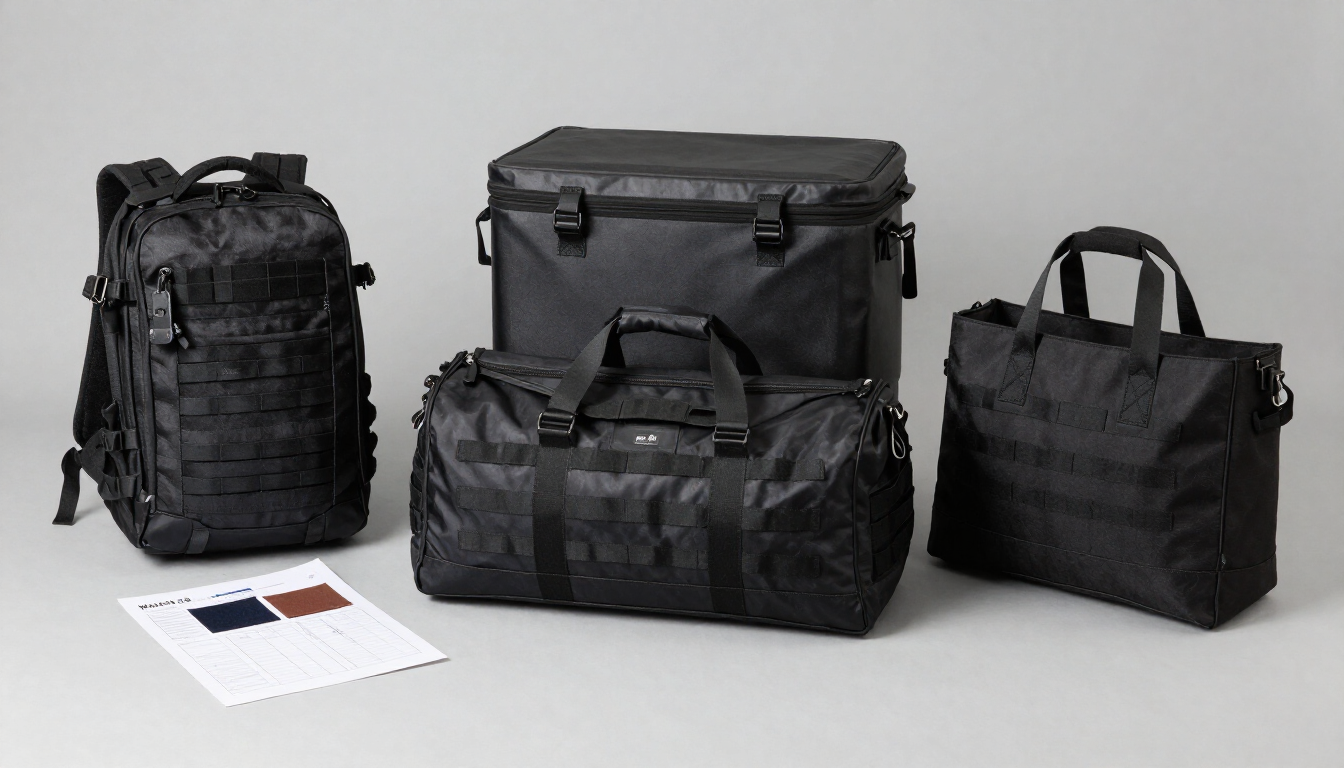
By Ronta | Custom Bag OEM/ODM Manufacturing Team
A practical B2B guide to materials, labor, MOQ, sampling, and FOB pricing — the Custom Bag Manufacturing Cost Guide from the Ronta OEM/ODM manufacturing team.
Quick Answer: How Much Does Custom Bag Manufacturing Cost in China?
The cost of manufacturing custom bags in China depends on the bag's design, dimensions, materials, construction complexity, order quantity, branding requirements, and delivery terms.
A simple promotional drawstring bag and a heavily padded technical backpack cannot be priced using the same manufacturing assumptions.
For B2B buyers, a reliable quotation should separate three cost categories:
- Unit manufacturing cost: Fabric, lining, padding, hardware, labor, branding, packaging, quality control, overhead, and manufacturing margin.
- One-time development expenses: Pattern development, prototype sampling, custom molds, printing screens, and product testing when applicable.
- Shipping and import expenses: International freight, insurance, customs duties, taxes, and destination delivery, depending on the agreed Incoterm.
At Ronta, the minimum order quantity is confirmed per project, subject to material and customization requirements. An accurate quotation requires confirmed product specifications rather than relying on a generic price per bag.
1. What Determines the Manufacturing Cost of a Custom Bag?
Custom bag manufacturing involves multiple production stages, including material sourcing, pattern development, cutting, sewing, assembly, inspection, and packaging. The following table summarizes the major cost drivers.
| Cost Component | What It Includes | Main Pricing Variables |
|---|
| Outer materials | Polyester, nylon, canvas, coated fabrics | Material grade, fabric width, consumption, coating |
| Lining and padding | Polyester lining, PEVA, foam, reinforcement | Thickness, coverage, construction |
| Hardware and trims | Zippers, buckles, webbing, handles, labels | Supplier, grade, dimensions, customization |
| Cutting and sewing | Cutting, stitching, assembly, finishing | Number of operations, complexity, labor time |
| Branding | Screen printing, embroidery, patches | Colors, artwork, size, positions |
| Packaging | Polybags, hangtags, cartons | Packaging type, carton configuration |
| Quality control | Material inspection, production checks, final inspection | Inspection scope, testing requirements |
| Development | Patterns, prototypes, tooling | Design complexity, number of revisions |
| Overhead and margin | Factory operating expenses and commercial margin | Production efficiency, order requirements |
These categories are not fixed percentages of the selling price. Their relative importance varies significantly by product. For example, a basic drawstring bag may have a relatively simple sewing process, while a multi-compartment backpack requires additional cutting, reinforcement, zipper installation, and assembly operations.
Buyer takeaway: Two bags made from the same outer fabric can have very different manufacturing costs because their construction and component requirements differ.
2. How Much Do Different Types of Custom Bags Cost?
Different bag categories require different manufacturing processes. Rather than assuming a universal factory price, buyers should identify the main specifications that determine the cost of each category.
| Bag Type | Common Materials | Main Cost Drivers |
|---|
| Drawstring bags | 210D polyester, nylon, cotton | Fabric weight, dimensions, printing, drawcord |
| Tote bags | Cotton canvas, polyester, non-woven PP | Fabric consumption, handles, printing |
| Cosmetic bags | Polyester, nylon, canvas, coated fabric | Zippers, lining, compartments, decoration |
| Backpacks | 600D polyester, nylon, foam, mesh | Shoulder straps, padding, pockets, reinforcement |
| Duffel bags | Polyester, nylon, canvas | Size, carrying system, zippers, structural reinforcement |
| Cooler bags | Polyester, PEVA, EPE foam, aluminum-foil lining | Insulation, lining, dimensions, construction |
| Laptop bags | Polyester, nylon, protective foam | Padding, compartments, hardware, protection |
| Tool bags | Heavy-duty polyester or nylon | Reinforced base, load-bearing seams, pockets |
| Tactical bags | Heavy-duty nylon or polyester | Webbing systems, reinforcement, hardware |
| Emergency bags | Polyester, nylon, coated materials | Organization, visibility, compartments, load requirements |
A final unit price should be calculated from a defined bill of materials (BOM), approved construction details, and a confirmed order quantity. For category-specific development, see our Custom Bag Manufacturer service page.
Why is there no single reliable price for each category?
Consider two backpacks with similar external dimensions. Backpack A uses a single main compartment, basic polyester lining, standard zippers, and lightly padded shoulder straps. Backpack B uses multiple compartments, thicker protective foam, reinforced stress points, additional webbing, custom hardware, and a more complicated back panel.
Even if both products use 600D polyester, Backpack B may require more material, additional components, and substantially more assembly time. This is why a product photograph alone is not enough to establish a reliable manufacturing price.
3. How Do Materials Affect Custom Bag Manufacturing Costs?
Material selection is one of the most important decisions in OEM/ODM bag manufacturing.
Polyester vs. nylon vs. canvas
| Material | Common Applications | Cost Considerations |
|---|
| 210D polyester | Lightweight bags, drawstring bags | Low fabric consumption for lightweight designs |
| 600D polyester | Backpacks, sports bags, promotional bags | Balanced performance and availability |
| 1680D nylon | Heavy-duty bags, equipment bags | Material construction and performance requirements |
| Cotton canvas | Tote bags, lifestyle bags | Fabric weight, finishing, printing |
| rPET polyester | Recycled-content bags | Traceability, material specifications, certification requirements |
| PVC-coated fabric | Equipment bags, outdoor products | Coating weight, stiffness, welding or sewing requirements |
| TPU-coated fabric | Technical and outdoor bags | Coating specification, bonding, performance requirements |
Important technical distinction: Denier measures yarn linear mass. A higher denier does not automatically mean that a finished fabric has better abrasion resistance, tear strength, or durability. Performance also depends on fiber type, yarn construction, weave density, coating, and finishing. For a technical comparison of PU, PVC and TPU coating systems, see our PU vs PVC vs TPU Coatings for Bags guide. Buyers should request relevant test results rather than choosing fabric solely by its denier number.
How fabric consumption affects pricing
Fabric cost should be calculated from actual material usage, not simply from the finished bag's external dimensions. A simplified calculation is:
Fabric cost per bag = Purchased fabric price per unit × Fabric consumption per bag
Fabric consumption must account for panel layout, cutting efficiency, usable fabric width, and production waste. For example, if a design requires more separate panels, cutting waste may increase even when the finished bag's dimensions remain unchanged.
Standard colors vs. custom-dyed materials
Standard stock colors can reduce sourcing complexity. Custom colors may require: minimum fabric dyeing quantities, color matching and approval, additional material procurement time, small-batch dyeing charges, and minimum purchase quantities exceeding the bag order requirement. Before confirming a custom Pantone color, buyers should ask whether the selected material is available in stock or requires a separate dyeing order.
4. How Does Bag Construction Affect Labor Cost?
The number and complexity of manufacturing operations directly influence labor requirements. A basic tote bag may require cutting, handle preparation, body sewing, reinforcement, and finishing. A technical backpack may require additional operations, including:
- Shoulder strap construction
- Foam insertion
- Back-panel assembly
- Zipper installation
- Internal compartment construction
- Webbing attachment
- Stress-point reinforcement
- Binding and edge finishing
- Final dimensional inspection
More operations generally increase production time. However, labor cost is also affected by production efficiency, equipment, operator skill, and line balancing.
Why reinforcement matters
Reducing material usage or removing reinforcement can lower the apparent manufacturing cost, but it may also reduce product durability. For load-bearing bags, buyers should carefully evaluate: handle attachment points, shoulder strap connections, bottom-panel construction, seam allowances, stitch density, reinforcement patches, and bar-tack placement where appropriate. A lower quotation is not necessarily a better purchasing decision if the product fails during normal use.
5. How Does MOQ Affect Custom Bag Pricing?
MOQ stands for Minimum Order Quantity. For custom bag manufacturing, MOQ is influenced by both material purchasing requirements and factory production efficiency. Ronta's standard MOQ is confirmed per project, with final requirements depending on materials, colors, and construction.
Why do larger orders often reduce unit costs?
Some expenses are incurred once per production run rather than once per bag. Examples include pattern preparation, printing screens, machine setup, and production line changeovers. A simple mathematical example illustrates the effect.
Assume a hypothetical project has a one-time setup expense of US$300.
| Order Quantity | Setup Cost per Bag |
|---|
| 300 pieces | US$1.00 |
| 500 pieces | US$0.60 |
| 1,000 pieces | US$0.30 |
| 3,000 pieces | US$0.10 |
| 5,000 pieces | US$0.06 |
This is an illustrative calculation, not a Ronta setup charge or quotation. The formula is:
Allocated setup cost per bag = Total setup expense ÷ Order quantity
As order quantity increases, the allocated setup expense per bag decreases. However, this does not mean every component becomes cheaper at the same rate. Material prices, custom dyeing minimums, production capacity, and order scheduling can create different cost thresholds.
Does ordering multiple colors affect MOQ?
Yes, potentially. For example, a 1,000-piece order split across five custom colors may have different material procurement economics from a 1,000-piece order in one stock color. Buyers should confirm MOQ requirements for each style, color, and material specification before finalizing the purchase order.
6. How Much Does Custom Bag Sampling Cost?
Sampling is a separate development stage that helps verify product construction before mass production. Depending on the design, sample development may involve: reviewing drawings or reference products, preparing patterns, selecting suitable materials, cutting sample components, sewing the prototype, reviewing dimensions and functionality, and revising construction details when required.
Sample cost depends on design complexity, material availability, and the number of development rounds.
What can increase sample cost?
- Custom-developed patterns
- Special materials ordered in small quantities
- Custom metal or plastic components
- Multiple design revisions
- Complicated printing or embroidery
- Specialized testing requirements
A pre-production sample should be approved before bulk production whenever the project requires strict consistency. Buyers should also clarify whether sample charges, tooling charges, and testing fees are included in or separate from the bulk quotation.
7. How Do Zippers, Buckles, and Other Accessories Affect Cost?
Accessories can materially influence the cost and reliability of a finished bag.
Zippers
Important specifications include zipper size, chain material, slider type, finish, length, and performance requirements. A standard nylon zipper and a specialized water-resistant zipper are not interchangeable in either cost or function.
Buckles and hardware
Buyers should consider: plastic or metal construction, required load performance, corrosion resistance, custom shapes or finishes, tooling requirements, and compatibility with webbing dimensions.
Webbing and handles
Webbing cost depends on material, width, thickness, weave, finishing, and total length consumed per bag. For heavy-duty products, the handle and strap attachment construction may be more important than the webbing material alone.
Procurement recommendation: Specify functional requirements and approved component grades before comparing quotations from different manufacturers.
8. How Much Does Custom Logo Printing Add to Bag Manufacturing Cost?
Branding cost depends on the decoration method and design requirements.
| Branding Method | Main Cost Drivers | Common Applications |
|---|
| Screen printing | Number of colors, print area, setup | Promotional bags, totes |
| Heat transfer | Artwork size, transfer materials, application | Multicolor logos |
| Sublimation | Printable material, coverage, process | Polyester products |
| Embroidery | Stitch count, size, complexity | Backpacks, premium bags |
| Woven labels | Label size, construction, quantity | Interior and exterior branding |
| Rubber patches | Mold requirements, size, colors | Outdoor and technical bags |
For example, a small one-color printed logo and a large multicolor embroidered design should not be expected to have the same production cost. Branding cost can also change when the artwork requires additional setup, positioning, or specialized handling.
9. How Is the FOB Price of a Custom Bag Calculated?
Many international bag manufacturing quotations use FOB terms. However, buyers should distinguish manufacturing cost from the final quoted selling price. A simplified commercial calculation is:
Quoted unit price = Allocated production costs + Packaging + Applicable quality and development allowances + Overhead + Commercial margin + Costs required under the agreed delivery term
The precise accounting treatment varies by factory.
Example: A hypothetical bag cost calculation
The following example demonstrates how to calculate a unit price. It is not an actual factory quotation. Assume: Materials and components: US$4.20; Direct manufacturing labor: US$1.60; Packaging and allocated quality costs: US$0.50; Allocated overhead and other production expenses: US$0.70.
The hypothetical cost subtotal is:
US$4.20 + US$1.60 + US$0.50 + US$0.70 = US$7.00 per bag
This subtotal is not necessarily the FOB selling price. A commercial quotation would also need to account for the factory's margin and any additional expenses required under the agreed Incoterm. The example demonstrates calculation methodology only. It does not represent a standard price for a particular bag category.
10. EXW vs. FOB vs. DDP: Which Price Should Buyers Compare?
International buyers should always compare quotations using the same delivery terms.
| Incoterm | General Meaning | Buyer Consideration |
|---|
| EXW | Goods made available at the agreed location | Buyer takes on extensive transport and export-related responsibilities |
| FOB | Seller delivers goods on board the vessel at the named shipment port | Buyer generally arranges and pays for main carriage |
| CIF | Seller arranges carriage and insurance to the named destination port | Risk transfers earlier than many buyers assume |
| DAP | Seller delivers to the named destination, ready for unloading | Import clearance and duties generally remain with buyer |
| DDP | Seller delivers under terms including import clearance and applicable duties | Tax, customs, and importer-of-record arrangements require careful review |
FOB and CIF are intended for sea and inland waterway transport. For containerized shipments, FCA or CIP may be more suitable depending on the delivery arrangement. For an accurate comparison, buyers should specify the named port or destination and the applicable Incoterms edition. A US$7.00 EXW quotation cannot be compared directly with a US$7.00 DDP quotation because the responsibilities and included expenses differ substantially.
11. What Additional Costs Should Importers Budget For?
The factory quotation is only one part of the purchasing budget. Depending on the project and delivery term, additional expenses may include:
- Prototype and sample courier charges
- Third-party laboratory testing
- Independent pre-shipment inspection
- Export handling and documentation
- International freight
- Cargo insurance
- Customs brokerage
- Import duties and taxes
- Domestic delivery
- Warehousing and distribution
The landed cost should be calculated using the actual destination country, customs classification, shipment characteristics, and applicable trade requirements.
Landed cost per bag = Total applicable product and import costs ÷ Number of saleable bags received
Avoid applying a universal percentage for customs duties or shipping costs. These vary by destination, product classification, shipment size, and transport conditions.
12. How Can Buyers Reduce Custom Bag Manufacturing Costs Without Sacrificing Quality?
Cost optimization should focus on unnecessary complexity rather than removing essential performance features.
- Use standard materials when possible — stock materials and colors can reduce sourcing complexity and custom-dyeing requirements.
- Simplify construction — review whether every compartment, zipper, decorative panel, and attachment is necessary. Reducing unnecessary operations may improve manufacturing efficiency.
- Standardize hardware — using compatible stock buckles, zippers, and other components can reduce custom tooling requirements.
- Optimize fabric cutting — a well-designed panel layout can improve material utilization.
- Consolidate purchasing volumes — larger production runs may distribute setup expenses across more units, provided material and inventory economics support the decision.
- Select the right branding method — choose screen printing, embroidery, heat transfer, or other decoration methods based on the artwork, quantity, material, and desired appearance.
- Preserve critical reinforcement — do not eliminate reinforcement at handles, shoulder straps, or other high-stress locations without evaluating product performance.
- Approve specifications before production — a complete technical specification and approved sample can reduce misunderstandings, rework, and unexpected changes.
The best cost reduction is one that preserves the product's intended performance and required quality standards.
13. What Information Is Needed for an Accurate Custom Bag Quotation?
A manufacturer can prepare a more reliable quotation when the buyer provides a complete product brief.
Custom Bag RFQ Checklist
| Information | What to Provide |
|---|
| Product type | Backpack, cooler bag, duffel, tote, tool bag, etc. |
| Dimensions | Length × width × height |
| Quantity | Pieces per style and color |
| Outer material | Fabric type, weight or denier, coating |
| Lining | Material and construction |
| Padding | Type, thickness, and placement |
| Zippers | Type, size, brand or performance specification |
| Hardware | Buckles, hooks, rings, and other components |
| Branding | Logo artwork, dimensions, colors, placement |
| Packaging | Individual packaging and carton requirements |
| Performance | Load capacity, abrasion, water resistance, insulation |
| Compliance | Destination-market requirements and test scope |
| Delivery | Destination, Incoterm, target delivery date |
| Reference | Drawings, tech pack, photos, or physical sample |
A detailed RFQ allows manufacturers to identify cost-saving alternatives without making unsupported assumptions about product performance.
14. How to Compare Quotations From Different Bag Manufacturers
The lowest unit price does not always represent the lowest overall purchasing cost. Before selecting a supplier, compare:
- Material composition and specifications
- Fabric coating and backing
- Zipper and hardware grades
- Padding thickness and coverage
- Construction and reinforcement
- Branding quality
- Quality control requirements
- Packaging specifications
- Sampling and tooling charges
- MOQ and production schedule
- Incoterms and included logistics expenses
If two quotations differ substantially, request a specification-by-specification comparison. For example, a lower quotation may reflect a lighter lining, fewer reinforced seams, different zipper specifications, or reduced padding. These changes may be acceptable for some products, but they should be disclosed and evaluated rather than assumed to be equivalent.
15. Frequently Asked Questions
How much does it cost to manufacture a custom backpack in China?
The cost depends on size, outer fabric, lining, padding, compartments, zippers, straps, hardware, branding, and order quantity. A simple promotional backpack and a technical laptop backpack require different manufacturing processes. A reliable quotation requires a defined specification and quantity.
What is the minimum order quantity for custom bags in China?
MOQs vary by manufacturer, material, and product complexity. At Ronta, the standard MOQ is confirmed per project, subject to the project's material and customization requirements.
Does ordering 1,000 bags cost less per unit than ordering 500?
It can. Larger orders distribute fixed setup costs across more units and may improve material purchasing and production efficiency. However, actual savings depend on supplier pricing, material minimums, and construction.
Is 600D polyester cheaper than nylon?
There is no universal price relationship between all 600D polyester and nylon fabrics. Fiber type, yarn construction, coating, weave density, finish, purchase quantity, and supplier specifications must be compared.
How much does custom bag sampling cost?
Sampling charges depend on pattern complexity, materials, prototype construction, and the number of revisions. Custom hardware, specialized printing, and testing can add separate expenses.
Are custom logo printing costs included in the factory quotation?
This depends on the quotation. Buyers should confirm whether printing, embroidery, patches, artwork setup, and tooling are included.
What is the difference between manufacturing cost and FOB price?
Manufacturing cost reflects the resources and expenses involved in producing the goods. An FOB quotation is a commercial selling price that also includes the seller's obligations under the agreed FOB delivery term.
Does a thicker cooler bag insulation layer always provide better thermal performance?
Not necessarily. Thermal performance also depends on insulation material, bag geometry, seams, closure design, ambient conditions, contents, and testing methodology. Thickness should be evaluated as part of the complete insulation system.
Can a factory reduce the price without changing the materials?
Sometimes. Cost reductions may come from improving cutting efficiency, simplifying unnecessary construction, standardizing components, or increasing order quantity. The feasibility depends on the original design.
How can I obtain an accurate custom bag manufacturing quotation?
Provide the product dimensions, materials, quantity, design references, branding requirements, packaging, target market, and delivery terms. A manufacturer can then evaluate the bill of materials, construction, and production requirements.
Conclusion: Understanding the Real Cost of Custom Bag Manufacturing
The cost of manufacturing custom bags in China is determined by more than the outer fabric or order quantity. Materials, construction, labor, hardware, branding, sampling, quality control, packaging, and delivery terms all influence the final quotation.
For professional B2B buyers, the most effective approach is to compare manufacturers using consistent technical specifications and clearly defined commercial terms. A transparent quotation should explain what is included, what is excluded, and which design decisions affect the price.
Request a Custom Bag Manufacturing Quotation From Ronta
Ronta provides OEM/ODM Bag Manufacturing in Xiamen, China. Our product categories include Custom Backpack Manufacturer, Custom Duffel Bag Manufacturer, Custom Cooler Bag Manufacturer, sports bags, tool bags, emergency bags, tactical bags, cosmetic bags, and other sewn bag products.
Standard MOQ: confirmed per project, subject to material and customization requirements. To discuss your project, please send your product drawings, reference images, specifications, estimated quantity, and destination market.
Website: https://www.xmrontabags.com/ · Email: sales@xmronta.com · Contact Ronta
Editorial note: The hypothetical calculations in this article are educational examples, not current factory quotations. Actual manufacturing prices require project-specific evaluation. Product specifications, material availability, freight, and commercial conditions may change over time.
Frequently Asked Questions
How much does it cost to manufacture a custom backpack in China?
The cost depends on size, outer fabric, lining, padding, compartments, zippers, straps, hardware, branding, and order quantity. A simple promotional backpack and a technical laptop backpack require different manufacturing processes. A reliable quotation requires a defined specification and quantity.
What is the minimum order quantity for custom bags in China?
MOQs vary by manufacturer, material, and product complexity. At Ronta, the standard MOQ is confirmed per project, subject to the project's material and customization requirements.
Does ordering 1,000 bags cost less per unit than ordering 500?
It can. Larger orders distribute fixed setup costs across more units and may improve material purchasing and production efficiency. However, actual savings depend on supplier pricing, material minimums, and construction.
Is 600D polyester cheaper than nylon?
There is no universal price relationship between all 600D polyester and nylon fabrics. Fiber type, yarn construction, coating, weave density, finish, purchase quantity, and supplier specifications must be compared.
How much does custom bag sampling cost?
Sampling charges depend on pattern complexity, materials, prototype construction, and the number of revisions. Custom hardware, specialized printing, and testing can add separate expenses.
Are custom logo printing costs included in the factory quotation?
This depends on the quotation. Buyers should confirm whether printing, embroidery, patches, artwork setup, and tooling are included.
What is the difference between manufacturing cost and FOB price?
Manufacturing cost reflects the resources and expenses involved in producing the goods. An FOB quotation is a commercial selling price that also includes the seller's obligations under the agreed FOB delivery term.
Does a thicker cooler bag insulation layer always provide better thermal performance?
Not necessarily. Thermal performance also depends on insulation material, bag geometry, seams, closure design, ambient conditions, contents, and testing methodology. Thickness should be evaluated as part of the complete insulation system.
Can a factory reduce the price without changing the materials?
Sometimes. Cost reductions may come from improving cutting efficiency, simplifying unnecessary construction, standardizing components, or increasing order quantity. The feasibility depends on the original design.
How can I obtain an accurate custom bag manufacturing quotation?
Provide the product dimensions, materials, quantity, design references, branding requirements, packaging, target market, and delivery terms. A manufacturer can then evaluate the bill of materials, construction, and production requirements.
Email: sales@xmronta.com
Browse the site: Home · Bags Manufacturing · Portfolio · Knowledge Base · FAQ · OEM & ODM Service · Contact · Our Factory