Choose Between Duffel and Tote Bags for the Carry Task
Products & Capabilities
Compare duffel and tote formats by real contents, opening access, carry modes, branding area and packing requirements before sampling.
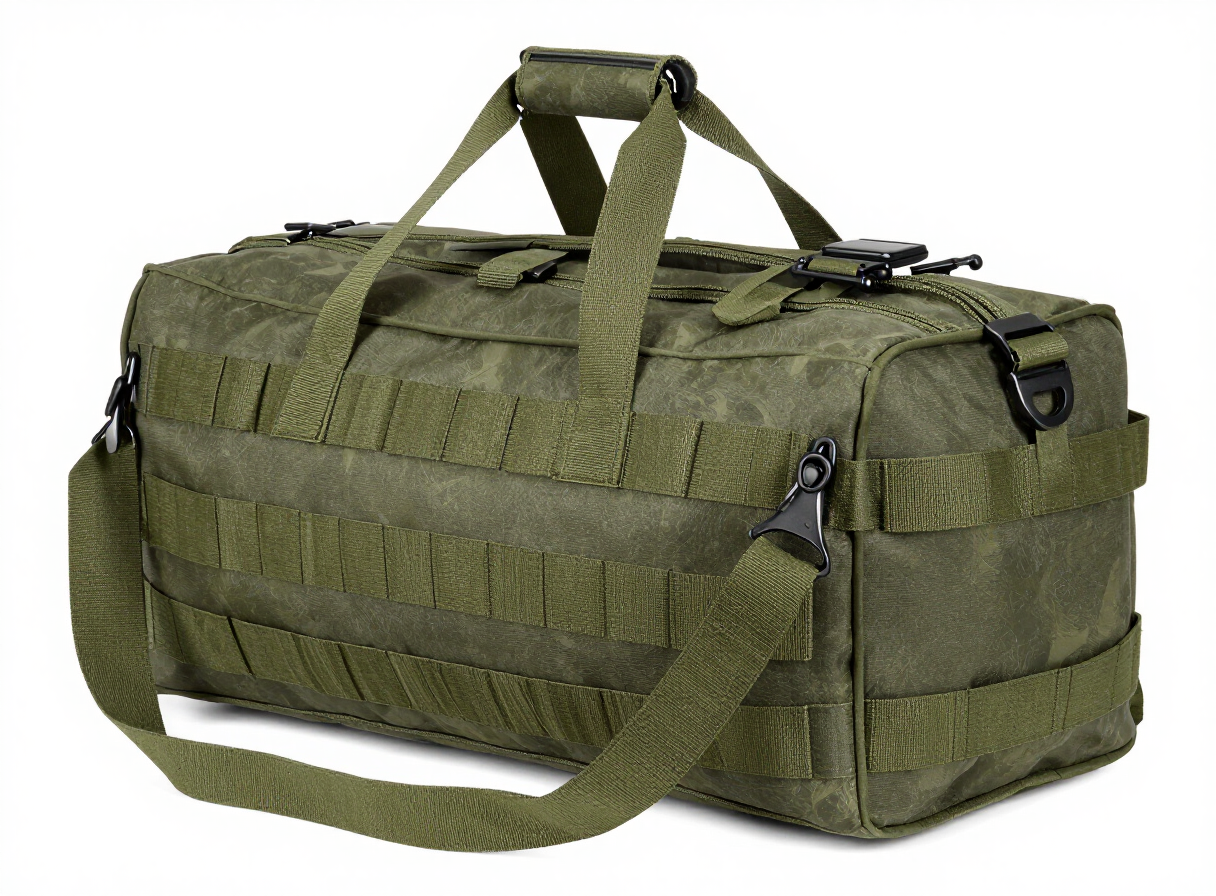
A duffel and a tote are both carry formats, but they answer different carry tasks. The right choice follows from the real contents, how they are loaded and reached, how the bag is carried and set down, and how it is branded and packed — not from a format label. Ronta (Xiamen) Co., Ltd produces both formats, and this guide compares them against the actual carry task so a buyer can submit the selected format for review rather than assume one is lighter, cheaper or more capable than the other.
Ready to start? Review a Duffel and Tote Format Brief.
Compare the formats against the carry task
A format label does not guarantee a fixed capacity, a waterproof wet pocket, a load rating or a lower cost. A tote can have closures, zippers and long straps; a duffel need not always be round, huge or carried on the shoulder. Optional features — wheels, shoe pockets, trolley sleeves, internal organizers — are added only when requested and feasible for the selected brief, not defaulted as standard factory capabilities. Record the actual contents geometry, the opening and access, the closure, the set-down footprint and carry mode, the strap and grip clearances, the organizer needs, the storage or dispatch state, and the approved branding placement.
Carry decision matrix
Use this matrix to review each format against the same carry task. Fill each row with the values agreed for the project, then review the representative fit check on a sample.
| Carry decision | Duffel design to review | Tote design to review | Representative fit check |
|---|
| Contents geometry and capacity | How the real contents sit against the selected panel, base and gusset and whether the load settles at the base. | How the real contents sit against the selected panel, base and gusset and whether the gusset holds them. | Pack the sample with the real contents and record the fit, the headroom and any item that distorts the shape. |
| Opening, access and closure | The main opening width, the zipper or clip closure, and how the contents are reached. | The top opening, any zip or snap closure, and how wide the mouth opens. | Open and close the sample with the contents inside and record the access and any closure clearance issue. |
| Set-down footprint and carry mode | How the duffel sits when set down and the carry modes — hand, shoulder or backpack straps. | How the tote stands and the carry modes — hand or shoulder — and the handle drop clearance. | Set the loaded sample down and carry it; record the footprint, the carry comfort and the grip clearance. |
| Strap and grip clearances | The handle length, the shoulder strap and any stowage of straps when not in use. | The handle drop over the shoulder and the grip clearance in the hand. | Carry the loaded sample and record the strap and grip clearances against the wearer and clothing. |
| Organizer and separation needs | Internal pockets, end pockets and any wet or shoe separation reviewed against the contents. | Internal pockets, dividers and any closure reviewed against the contents. | Load the sample and record whether the organizers hold the items they are meant to. |
| Storage and dispatch state | The chosen flat, folded or assembled dispatch state for the duffel. | The chosen flat, folded or assembled dispatch state for the tote. | Record the dispatch dimensions and the chosen state reviewed on the sample. |
| Approved branding placement | The branding area, method and placement datum on the duffel. | The branding area, method and placement datum on the tote. | Review the decoration proof on the selected format and record the approved placement. |
Materials, reinforcement and construction
Materials, reinforcement, joins and handles are selected against the loaded assembly and the agreed care — not from a fixed denier or a promotional-versus-canvas hierarchy. A lighter fabric is not automatically a promotional grade, and a heavier fabric is not automatically premium; the selected material, lining, seam and hardware are reviewed together on the loaded sample. Record the actual materials and reinforcement agreed for each format.
Compare each format quote independently
Record each format quote independently with the same contents, quantities, artwork and packing scope, and the same development deliverables — not a same-price or same-quality assumption. The quotation reflects the selected materials, construction, branding, quantity allocation and packing for that format, confirmed in writing per project. MOQ, sampling and production milestones are confirmed per project rather than assumed as flexible or fixed.
Inspection and release
Inspection scope and release are agreed per project — there is no standard AQL value or test set that applies to every order. Record the sampling plan, acceptance numbers and photo-report requirements agreed for the batch; an AQL pass is a sampling acceptance result, not a performance certification. Approve the sample first, then agree the lot inspection scope separately.
Related guides
For duffel development, see the duffel bag manufacturer page. For tote development, see the custom tote bags manufacturer page. For OEM duffel order allocation and approval, see the OEM duffel wholesale guide. For comparing quotations, see the quote comparison guide.
To compare duffel and tote formats for your carry task, email sales@xmronta.com with the real contents, carry modes, branding area and packing requirements.
Frequently Asked Questions
Can the same kit fit both formats?
Sometimes. Pack the same contents into both formats and review the fit, headroom and any item that distorts the shape on each sample. A format label does not guarantee a fixed capacity, so the packed fit is confirmed on a loaded sample rather than assumed from the bag type.
Does bag type determine material or price?
No. Materials, reinforcement, joins and handles are selected against the loaded assembly and the agreed care, not from a fixed denier or a promotional-versus-canvas hierarchy. Each format is quoted independently with the same contents, quantities, artwork and packing scope, so price follows the selected specification rather than the format name.
What carry details should be reviewed?
Review the opening and access, the closure, the set-down footprint, the carry modes, the strap and grip clearances, the organizer needs, the storage or dispatch state, and the approved branding placement. Carry the loaded sample and record the footprint, carry comfort and grip clearance against the wearer and clothing.
What is needed to compare quotations?
Record each format quote independently with the same contents, quantities, artwork and packing scope, and the same development deliverables. The quotation reflects the selected materials, construction, branding, quantity allocation and packing for that format, with MOQ, sampling and production milestones confirmed in writing per project.
Send the real contents, carry modes, branding area and packing requirements for a duffel and tote format comparison.
Review a Duffel and Tote Format Brief
Email: sales@xmronta.com
Browse the site: Home · Bags Manufacturing · Portfolio · Knowledge Base · FAQ · OEM & ODM Service · Contact · Our Factory