Assess Nylon Tear Resistance with Comparable Test Evidence
Materials & Fabric
Compare nylon tear reports by fabric identity, method, specimen direction and conditioning, then review the selected material in the bag assembly.
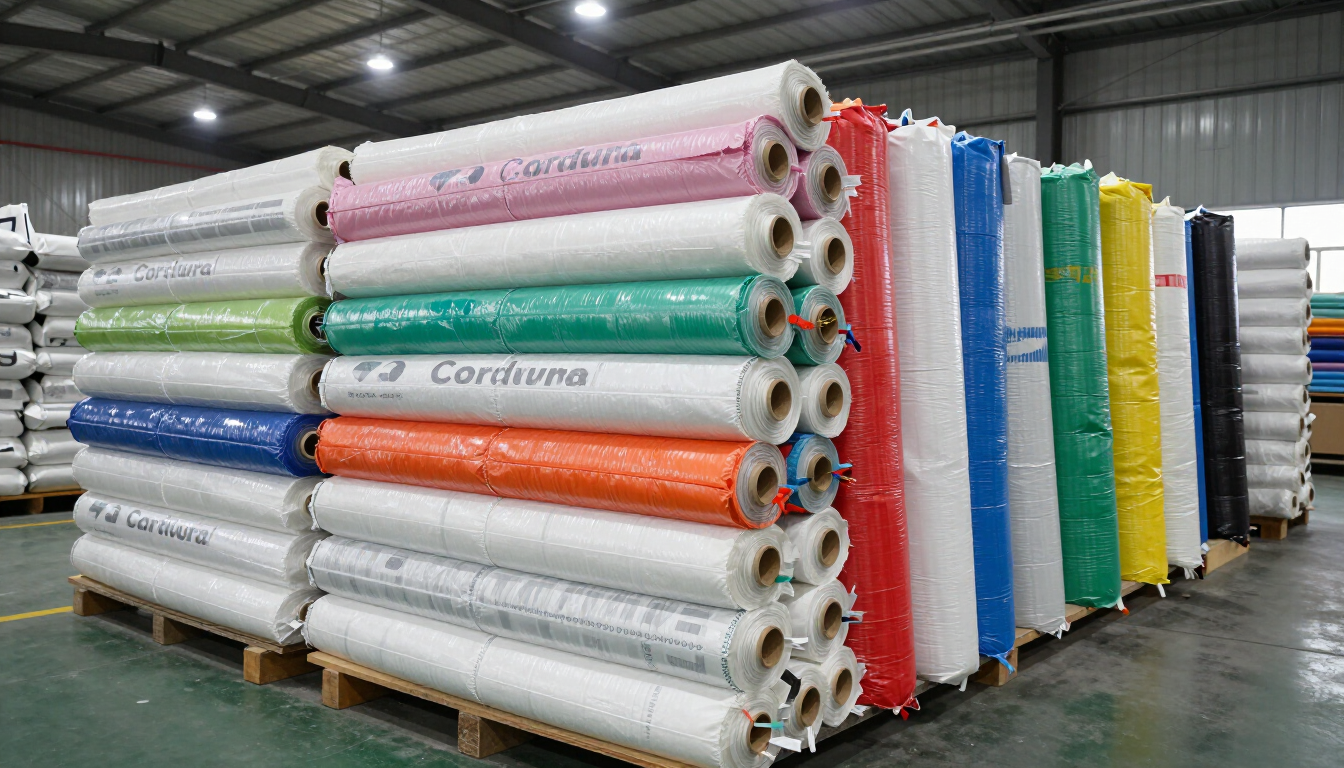
A tear-strength report describes how a specific fabric specimen resists the propagation of a cut under a defined test method. It does not rank nylon against polyester as fibers, or against CORDURA (a branded fabric family rather than a separate fiber), and it does not predict how a finished bag carries load. To assess nylon tear resistance for a bag program, compare different candidate fabrics under a comparable applicable method, specimen direction and conditioning — then review the selected material in the assembled bag.
Ready to start? Review a Nylon Tear Evidence Brief.
Record the Fabric and the Test Together
A tear result is meaningful only alongside the fabric and method that produced it. Record these five fields so two reports can be compared on equal terms rather than by a single number.
| Record | What to capture |
|---|
| Fabric identity | Grade or trade name, lot, weave construction, finish and coating as stated on the report |
| Applicable method | Test standard, edition, specimen dimensions and preparation (cut, notch direction) |
| Tear direction and conditioning | Warp or weft direction, conditioning atmosphere and duration before testing |
| Actual result | Reported value with units, number of specimens, mean and statistics, and any acceptance criterion cited |
| Limits and assembly review | Whether the result meets the agreed limit, which seam or attachment it affects, and the revision decision for the bag assembly |
Tear Propagation Is Not Tensile, Abrasion or Puncture
Tear propagation measures the force to continue a pre-cut slit through the fabric. It is a distinct property from tensile strength (pulling the fabric apart), abrasion resistance (surface wear), puncture resistance (point penetration), and the load a strap anchor carries when sewn into a bag. A fabric that tears easily may still have high tensile strength, and a high tear value does not confirm the sewn strap attachment holds under load. Review each property against its own test and against the assembly where it matters.
ISO 13937 Uses Different Methods by Part
The ISO 13937 family covers tear testing of textiles, but its parts measure tear by different principles and are not interchangeable. Part 1 determines tear force by the ballistic pendulum (Elmendorf) method. Part 2 uses the trouser tear method, which pulls a single-tear specimen apart on a tensile tester. A result from one part cannot be compared directly with a result from another, and neither replaces a whole-bag load test. The applicable method, edition and specimen preparation belong in the record above. For scope and method descriptions, refer to the ISO 13937 standard page.
Compare Actual Samples Under a Comparable Method
Compare tear results between different candidate fabrics tested under a comparable applicable method, specimen direction and conditioning. Each result is read against the specific fabric grade, weave, finish and matched test. A ripstop weave is evaluated on the actual sample and test — it does not guarantee resisting tear propagation in every direction or condition. If tear-strength reports are needed for a program, request them for the selected fabric grade and lot, and compare the matched results rather than relying on generic fibre-level assumptions.
Fabric Tear Is Not a Whole-Bag Load Rating
A fabric tear value describes the material specimen, not the assembled bag. The load a bag carries depends on seam construction, stitch density, the chosen strap-anchor reinforcement, webbing attachment, and how the load is distributed across panels. Confirm the assembled bag's load behaviour through a sample review and any agreed load test on the sewn construction — not from the fabric tear report alone.
Related guides: Nylon Backpack OEM Manufacturer Guide, Bag Fabric Comparison, Material Test Reports, Heavy-Duty Backpack Load Review, and Sample Evaluation.
Frequently Asked Questions
Does higher denier always mean higher tear resistance?
Not necessarily. Denier measures yarn linear density, not finished-fabric tear strength. A higher denier yarn can contribute to tear resistance, but the weave construction, finish, coating and test method all affect the result. Compare tear values for the specific fabric grade and lot under the same applicable method rather than assuming a denier number predicts tear performance.
Does ripstop construction stop all tearing?
Ripstop uses thicker reinforcement threads at intervals to resist the spread of small slits in the reinforced directions. It does not make a fabric tear-proof in every direction or under every condition. A ripstop weave is one construction choice reviewed alongside grade, finish and the applicable tear test — not a guarantee against all tearing.
Can tear results from different ISO 13937 parts be compared directly?
No. ISO 13937 parts use different test principles — for example, Part 1 uses the ballistic pendulum (Elmendorf) method and Part 2 uses the trouser tear method. Results from one part are not directly comparable with another. Record the applicable method, edition, specimen direction and conditioning so reports are compared on equal terms.
Does a fabric tear report predict how much load the finished bag carries?
No. A fabric tear value describes the material specimen, not the assembled bag. The load a bag carries depends on seam construction, stitch density, the chosen strap-anchor reinforcement and webbing attachment, and load distribution. Confirm the assembled bag's load behaviour through a sample review and any agreed load test on the sewn construction.
Share the selected nylon fabric grade, intended use and any required tear-strength target for quotation review.
Review a Nylon Tear Evidence Brief
Email: sales@xmronta.com
Browse the site: Home · Bags Manufacturing · Portfolio · Knowledge Base · FAQ · OEM & ODM Service · Contact · Our Factory