Compare 600D and 900D Polyester on Actual Fabric Samples
Materials & Fabric
Compare 600D and 900D polyester on actual fabric samples — yarn linear density, weave, finished mass and finish, and matched-method results that support a decision.
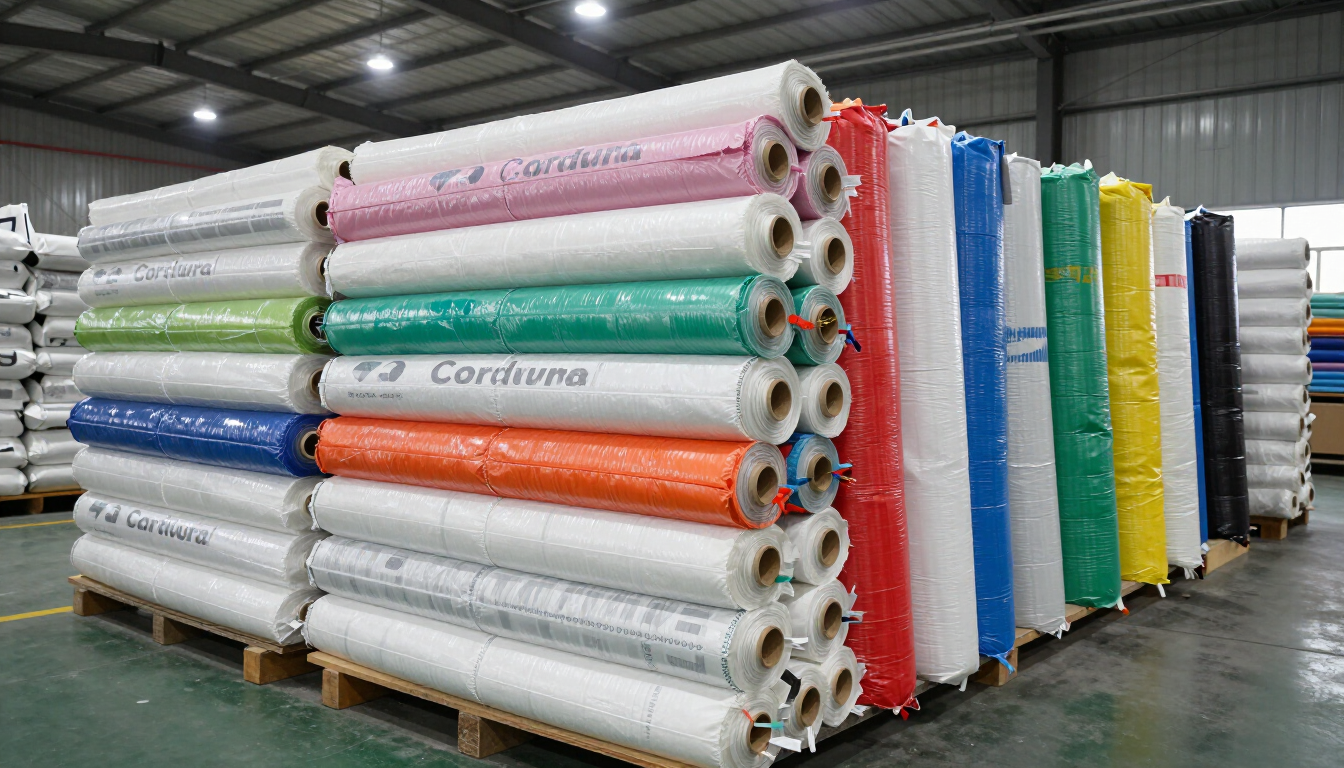
600D and 900D polyester are two candidate fabrics a buyer often compares for a custom bag. The denier number tells you one thing — the linear density of the yarn — and nothing else about the finished fabric or the finished bag. Comparing the two properly means recording what each label actually states and then measuring the two candidate samples under the same method, rather than ranking them by the number alone. For the broader fabric comparison across polyester, nylon and Cordura, see the bag fabric comparison guide.
Ready to start? Review a Polyester Fabric Comparison.
What denier does and does not tell you
Denier is the mass of a yarn expressed in grams per 9,000 metres. A 600D polyester yarn weighs 600 g per 9,000 m; a 900D polyester yarn weighs 900 g per 9,000 m. It is a measure of yarn linear density. It is not a measure of fabric thickness, fabric strength, abrasion resistance, finished bag mass, or a performance grade. A 900D yarn is heavier per unit length than a 600D yarn, but the finished fabric also depends on the fiber, the yarn construction, the weave, the thread set, the coating and the face finish — so two fabrics that share a denier number can differ in every property that matters, and a 900D fabric is not automatically denser, heavier, stronger, more abrasion-resistant, more premium, or higher-cost than a 600D fabric.
Record the two candidates on the same row
Compare the two candidate fabrics field by field, recording what the label states and what the actual sample shows under the same method and conditions. The table below is the field structure — fill it with the values from your two candidate samples, not from a catalogue claim.
| Field | What the label tells you | What to record from the actual sample | Decision it supports |
|---|
| Denier | Yarn linear density (600D or 900D) | Confirmed denier from the supplier datasheet or test | Whether the stated yarn mass matches the claim |
| Fiber and yarn construction | Polyester (fiber only) | Fiber type, yarn spinning method, filament or spun construction | Material identification and sourcing documentation |
| Weave and thread set | Not stated by denier | Weave type (plain, ripstop, oxford), ends and picks per cm | Hand, tear behaviour and print surface |
| Finished areal weight | Not stated by denier | GSM measured on the actual sample at agreed moisture condition | Actual fabric mass, comparable across candidates |
| Coating, lamination and face finish | Not stated by denier | Coating type (PU, PVC, TPU), lamination, calendering or DWR, and coverage | Whole-bag water behaviour and decoration compatibility |
| Hand, fold and drape | Not stated by denier | Stiffness and drape observed on the sample | Sewing behaviour and finished bag feel |
| Decoration proof | Not stated by denier | Print, embroidery or patch proof on the actual substrate and finish | Whether the chosen branding method adheres and reads correctly |
| Price and availability | Not stated by denier | Quoted price, minimum and lead time for the actual lot | Commercial comparison at the project quantity |
A coated fabric does not make the whole bag waterproof; seam closure, lining and the intended use are reviewed together on the assembled sample. Branded and recycled-content claims are confirmed against the selected material sourcing documents, not assumed from a name or a denier number.
No automatic grade by application
There is no rule that 600D is the promotional fabric and 900D is the tactical fabric. A 900D fabric can weigh less per square metre than a 600D fabric once weave and coating differ. The decision is made on the recorded sample data and the agreed method results for the project, not by assigning a grade from the denier number. Use the actual price, availability and approved revision for each candidate rather than a mandatory rank.
Related guides
For the broader fabric comparison across 420D, 600D, 1000D, Cordura, nylon and polyester, see the bag fabric comparison guide. For nylon fabric selection, see the nylon bags manufacturer page. For material test-report review, see the material test reports guide. For specification and sample evaluation, see the custom bag specification guide and the sample evaluation record.
To review a polyester fabric comparison for your project, email sales@xmronta.com with the two candidate fabric references, the intended use and the decoration method.
Frequently Asked Questions
Can a 900D polyester fabric weigh less than a 600D one?
Yes. Denier measures yarn linear density, not finished fabric mass. Weave, thread set, coating and lamination all change the grams-per-square-metre of the finished fabric, so a 900D fabric can weigh less per square metre than a 600D fabric. Compare the measured GSM of the actual samples rather than inferring mass from the denier number.
Is 900D polyester more abrasion-resistant than 600D?
Not automatically. Abrasion resistance depends on the fiber, yarn construction, weave, coating and face finish, not on denier alone. Two fabrics of the same denier can differ in abrasion performance, and a 900D fabric is not guaranteed to outperform a 600D fabric. Record the abrasion result from the actual sample under an agreed test method and conditions.
Does denier affect which printing method fits?
Denier alone cannot determine decoration compatibility. For print and heat transfer, the weave, face finish, coating and lamination of the actual substrate decide whether the decoration adheres and reads correctly. For embroidery, the substrate and finish decide stitch stability, distortion and appearance on the actual fabric. Run a decoration proof on the actual candidate fabric and finish rather than assuming a method from the denier number.
Can I substitute 900D for 600D (or vice versa) without re-checking?
No. A denier change is a material change that is reviewed against the approved revision. The substitute fabric is recorded with its fiber, weave, GSM, coating and finish, and the affected items — fit, construction, decoration and any agreed test — are re-reviewed before release. The substitute is confirmed on a sample, not assumed to match.
Send the two candidate fabric references, the intended use and the decoration method so the comparison can be reviewed against your project.
Review a Polyester Fabric Comparison
Email: sales@xmronta.com
Browse the site: Home · Bags Manufacturing · Portfolio · Knowledge Base · FAQ · OEM & ODM Service · Contact · Our Factory